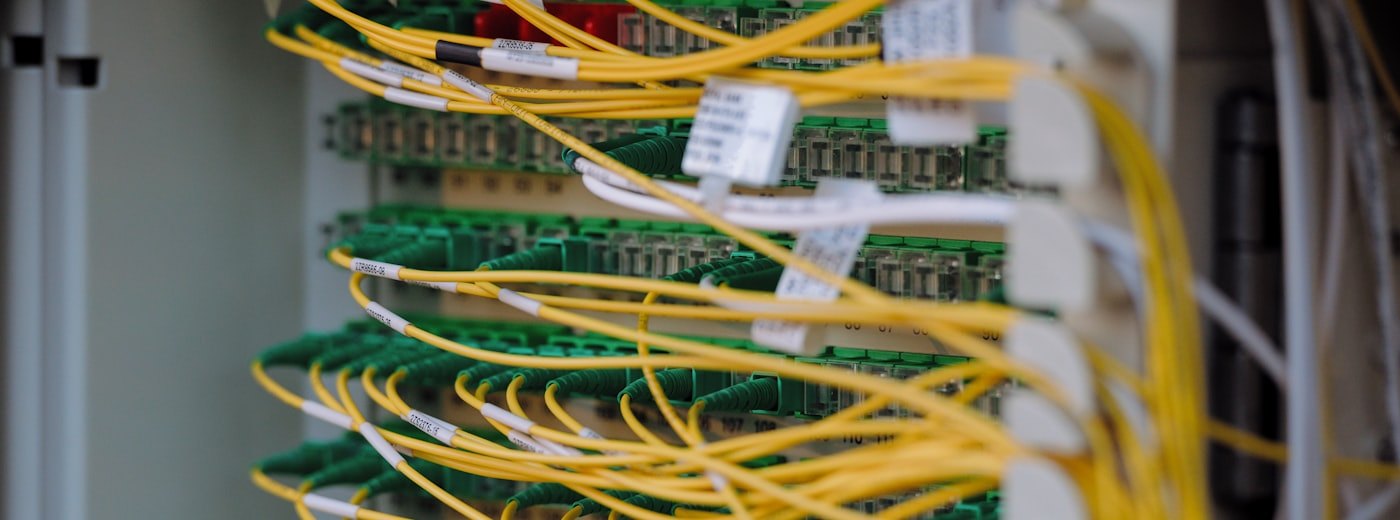
When a global enterprise decides to enter India at scale, the payments question stops being about a checkout page and becomes about a backbone. A large software, technology, or AI company arriving in India is not simply trying to accept a transaction. It is building the money-movement infrastructure that will carry millions of payments in, route them intelligently, reconcile them precisely, and push funds back out to vendors, partners, and employees. That backbone is the difference between an India operation that scales smoothly and one that strains under its own volume.
India is a particularly compelling place to build that backbone because of where it sits in the global payments order. The country's instant-payment network, UPI, accounts for roughly 49 percent of all real-time payments worldwide, making it the largest such system on the planet. An enterprise entering India is plugging into the single biggest pool of real-time payment activity anywhere, supported by a mature ecosystem of methods, mandates, and settlement rails that already operate at extraordinary scale.
For an enterprise, the work is to translate that scale into a stack. Recurring revenue must run on strong e-mandates. Routing must maximize success rates across providers. Reconciliation must be precise enough to satisfy a global finance organization. Payouts must move money to thousands of counterparties reliably. This piece lays out how an enterprise assembles that backbone for India, and how a partner that is both advisor and executor can stand it up.
- India hosts the world's largest real-time payments system, with UPI accounting for roughly 49 percent of global real-time payment volume, which makes it foundational infrastructure for any enterprise operating at scale.
- An enterprise backbone has to handle recurring collection through UPI Autopay e-mandates, intelligent payment routing for higher success rates, precise reconciliation, and reliable payouts to vendors and employees.
- A banking layer like RazorpayX, paired with AI-driven routing through Optimizer, lets an enterprise operate current accounts, payouts, payroll, and escrow alongside its collections through a single integrated stack.
India as global real-time payments infrastructure
The strategic case for treating India as core infrastructure rests on a single striking fact. UPI represents about 49 percent of all real-time payments globally, the largest real-time payment system in the world. That is not a regional curiosity. It is a structural reality of the global payments map, and an enterprise that builds well in India is building on rails that already carry a meaningful share of the planet's instant money movement.
The depth behind that share is what makes it usable at enterprise scale. UPI is an instant account-to-account network that settles in seconds and operates continuously. Around it sits a full complement of methods an enterprise can collect against: cards including the domestic RuPay network, netbanking, wallets, EMI and no-cost EMI for larger purchases, and recurring payments via UPI Autopay. The ecosystem is not only large, it is complete, which means an enterprise can design a payment architecture in India without compromise.
The macro backdrop adds urgency. India is the fastest-growing major economy, and its digital economy is expanding roughly twice as fast as the overall economy. An enterprise building a payments backbone today is building for a base of activity that is large now and growing faster than almost anywhere else. The infrastructure decisions made at entry will compound over years of expansion.
Recurring revenue and e-mandates at scale
For most enterprise software and AI businesses, recurring revenue is the engine, and at scale the mechanics of recurring collection become a serious operational discipline. India runs recurring payments through UPI Autopay, an e-mandate system that lets a customer pre-authorize repeat charges against their bank account. For an enterprise managing a large book of subscriptions, the mandate framework is the foundation of predictable cash flow.
Operating e-mandates at scale is a different exercise from setting up a single subscription. An enterprise must manage mandate creation across a large and varied customer base, handle the full lifecycle of each authorization, schedule collection cycles that move enormous numbers of charges, and account for the natural rhythm of retries and renewals. Done well, the result is a recurring-revenue operation that collects reliably and quietly across millions of customers. Done poorly, it becomes a source of avoidable revenue leakage.
This is why an enterprise wants a subscriptions and recurring-payments capability built for volume rather than improvised. Razorpay's subscriptions and recurring product runs on UPI Autopay and is designed to manage mandates and collection cycles at scale, so the enterprise can grow its subscriber base without growing its operational fragility. The customer authorizes once, and the system carries the recurring relationship forward across renewals and retries.
Routing for success rates: the role of Optimizer
At enterprise volume, the success rate of payment attempts is a financial metric in its own right. Every fraction of a percentage point of additional success translates directly into captured revenue that would otherwise have failed at the moment of payment. This is the problem intelligent routing exists to solve.
Razorpay's Optimizer is an AI and machine-learning payment-routing product that directs each transaction along the path most likely to succeed. By learning from patterns across providers and conditions, it routes payments to maximize the chance of completion. Razorpay reports that Optimizer can deliver up to roughly a 10 percent uplift in success rates. For an enterprise processing very large volumes, an uplift of that magnitude is substantial, because it applies across every transaction the system handles.
Routing intelligence also gives an enterprise resilience. Rather than depending on a single path for every payment, the stack can adapt in real time, steering transactions toward the routes performing best at any given moment. That adaptability matters most precisely when volume is highest, which is exactly when an enterprise can least afford preventable failures. Optimizer turns routing from a static configuration into a continuously improving system.
Reconciliation and payouts as core operations
An enterprise payments backbone is judged as much on what happens after the money arrives as on the collection itself. Two operational disciplines define that back end: reconciliation and payouts.
Reconciliation at scale means matching enormous numbers of incoming payments to the right customers, invoices, and ledger entries with precision. A global finance organization needs its India books to tie out cleanly and automatically, because manual matching does not survive contact with enterprise volume. The settlement of funds in INR, paired with GST-compliant invoicing, gives the finance team records in the format it needs, and automated matching keeps the ledger accurate as transaction counts climb. Clean reconciliation is what lets leadership trust the numbers coming out of the India operation.
Payouts are the other half of money movement, and at scale they are just as demanding as collection. An enterprise operating in India must move funds outward constantly, to vendors, partners, contractors, and employees. Those flows have to be reliable, timely, and traceable. Vendor payments must clear on schedule, payouts must reach the right accounts, and the whole outbound operation must hold up under volume. An enterprise backbone treats payouts as a first-class function rather than an afterthought, because the credibility of the operation depends on money going out as dependably as it comes in.
The banking layer: RazorpayX
Collections and payouts both sit on top of a banking layer, and this is where RazorpayX anchors the enterprise stack. RazorpayX is a business-banking layer delivered through partner banks. It is important to be precise here: RazorpayX is not itself a bank, but a layer that operates through partner banks to give an enterprise integrated control over its money movement.
The capabilities map directly to what an enterprise needs to run an India operation. RazorpayX provides current accounts, payouts, and payout links for moving money outward, along with vendor payments to keep the supply chain paid on time. It supports corporate cards for managed spending, payroll for compensating employees, and escrow for arrangements that require funds to be held and released under defined conditions. Taken together, these turn the abstract idea of a money-movement backbone into a concrete set of operational tools.
The strategic value is integration. Rather than stitching together separate systems for collection, banking, payouts, and payroll, an enterprise can operate them as a connected stack. Collections flow in through the payment gateway, funds settle and reconcile, and outbound payments move through the same integrated banking layer. That coherence is what lets a large operation scale without multiplying its operational complexity at every turn.
One stack, from collection to payroll
The advantage of a unified stack becomes clearest when an enterprise looks at the full lifecycle of a rupee inside its operation. Money enters through the gateway as a customer payment, routed by Optimizer for the best chance of success. It settles in INR and reconciles automatically against the right records. It then becomes available through RazorpayX for vendor payments, payouts, corporate-card spend, and payroll. The same rupee travels from a customer's UPI app to an employee's salary account within one connected system.
That end-to-end coherence is what an enterprise is really buying. It is not a collection of point solutions but a backbone, where each stage hands off cleanly to the next and the finance organization can see the whole flow. For a company entering India at scale, that integration is the foundation everything else is built on.
A partner that advises and executes
Building an enterprise payments backbone is as much a strategic exercise as a technical one, which is why the choice of partner matters beyond the feature list. Razorpay is one of the larger payments groups in India.
This is a partner operating at the scale an enterprise needs and growing toward the scale an enterprise plans for.
The company can accept global card and foreign-currency payments through the International Payment Gateway, which settles to the merchant in INR with the FX locked at checkout and the FIRC generated automatically. It can collect local UPI, cards, and netbanking at scale through an Indian subsidiary on Razorpay's Payment Gateway, with RazorpayX handling local banking, payouts, vendor payments, and payroll. One integration operationalizes the local presence.
Building for the agentic era
For an enterprise, especially an AI company, this forward posture is strategically meaningful. The backbone being built today should accommodate the payment patterns of tomorrow, where software agents act on behalf of users and businesses. A partner already piloting that future is positioning its enterprise customers to participate in it rather than retrofit for it later. The same stack that handles UPI Autopay mandates and Optimizer routing today is being extended toward agent-initiated payments, which keeps the enterprise on the leading edge of how money will move.
Assembling the backbone
An enterprise entering India at scale is building infrastructure, and the components are clear. It needs to collect across India's full method mix on the world's largest real-time payment network. It needs recurring revenue running on UPI Autopay e-mandates managed for volume. It needs intelligent routing to maximize success rates, precise reconciliation to keep a global finance organization confident, and reliable payouts to move money outward to vendors and employees. And it needs a banking layer that ties collection, settlement, and disbursement into one connected operation.
RazorpayX provides the banking layer, with current accounts, payouts, vendor payments, payroll, and escrow. Subscriptions at scale run on UPI Autopay. Optimizer routes for success. The International Payment Gateway and a domestic subsidiary on the Payment Gateway cover collection from global and local customers alike. For an enterprise, that combination turns India's unmatched real-time payments infrastructure into a backbone the business can stand on, one built to carry the company through years of growth in the fastest-growing major economy in the world.
As Head of US Revenue at Razorpay, Jason Kumpf advises global enterprises building the payments infrastructure that carries their India operations at scale. He is Head of US Revenue at Razorpay, one of the larger payments groups in India, and an advisor to technology and AI companies expanding across borders. More about Jason.
More on expanding to India